NASA Teams Approve SR-1 Freedom Mission Architecture
NASA has completed the review of the SR-1 Freedom mission and approved the spacecraft's key elements. The launch is planned for late 2028; the mission will be the first to demonstrate nuclear electric propulsion in deep space.
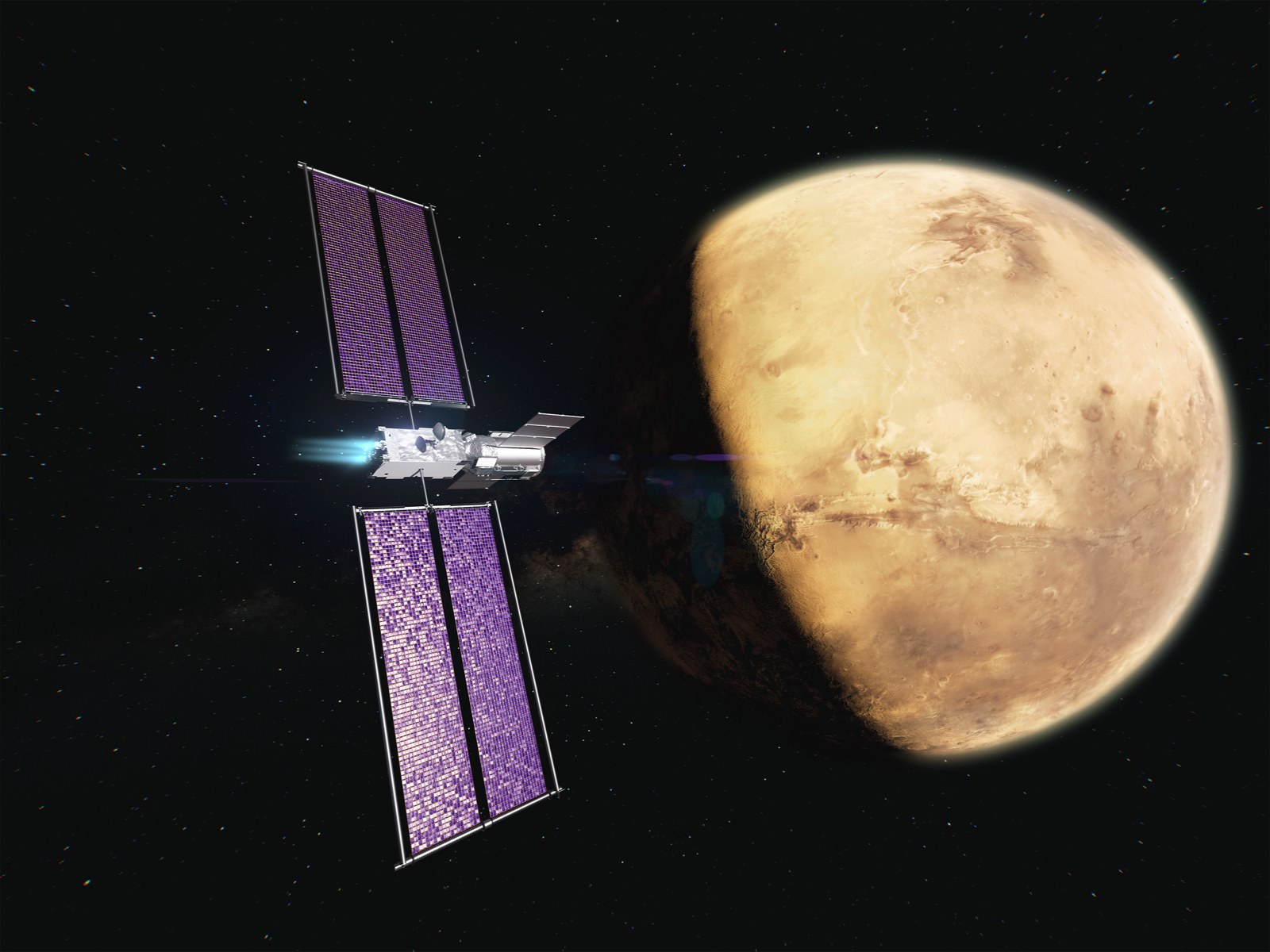
SR-1 Freedom is set to deliver the SkyFall capsule with three next-generation helicopters to Mars. The spacecraft will utilize nuclear and solar energy, while the helicopters, after landing, will study the planet's geology and climatic history, explore new terrain, and search for subsurface ice.
In the updated design, the boom separating the reactor from the main body has been shortened. This will reduce mass and simplify assembly. With improved shielding, the reactor can also be positioned closer to other systems without additional risk to electronics and payload.
NASA has awarded the Johns Hopkins University Applied Physics Laboratory a contract worth 39.3 million dollars to develop a heat removal system for the nuclear module. The system will be designed, tested, and the necessary flight equipment prepared; Advanced Cooling Technologies will serve as the commercial partner for the project.
After departing Earth orbit, the reactor will gradually reach full power and transmit operational data back to Earth. SR-1 will then switch to solar power during the flight to Mars, and after delivering SkyFall to the planet's orbit, the reactor will be restarted for additional testing.