IceCube Detects High-Energy Neutrino Event
On November 23, IceCube recorded the event IceCube-261123A. The collaboration assessed the probability of its astrophysical origin as moderate, but the nature of the signal has not yet been confirmed.
The event passed selection in the ICECUBE_Astrotrack_BRONZE stream. For such alerts, the calculated rate of false positives due to atmospheric background is 1.205 events per year. Therefore, the signal may be associated not with a distant cosmic source but with the interaction of cosmic rays with Earth's atmosphere.
Following the automatic alert, specialists refined the neutrino arrival direction using more complex algorithms. The calculated direction region has an uncertainty of approximately 1.5–1.7° in each coordinate. The Fermi LAT FL16Y catalog contains no known gamma-ray sources in this region; however, a weak, variable, or non-gamma-ray-emitting source cannot be ruled out.
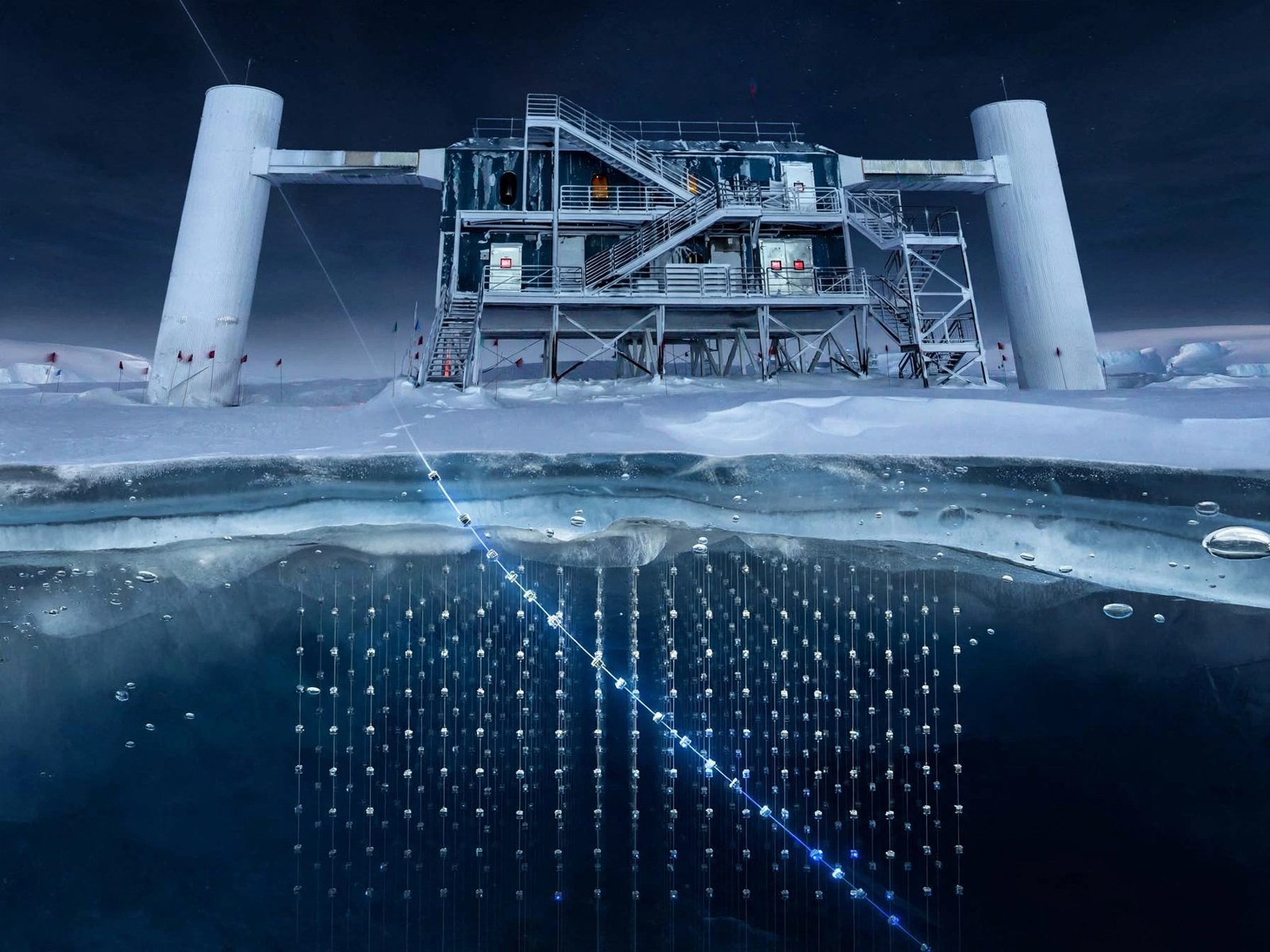
IceCube is located in Antarctic ice near the South Pole and detects the light produced by neutrino interactions with matter. The event coordinates and probability map have been published in the General Coordinates Network (GCN) system for prompt astronomical alerts to enable follow-up observations by other observatories.