Scientists Read Humpback Whale Genome from Exhalation Collected by Drone
Researchers obtained whole-genome data of humpback whales from droplets of exhaled air collected by small drones. The method allowed studying the animals' DNA without biopsy and may expand opportunities for monitoring the condition of marine populations.
The work was carried out by a team including the University of St Andrews in Scotland. Scientists studied humpback whales off the coast of British Columbia in Canada. The results were published on November 17 in the journal Molecular Ecology Resources.
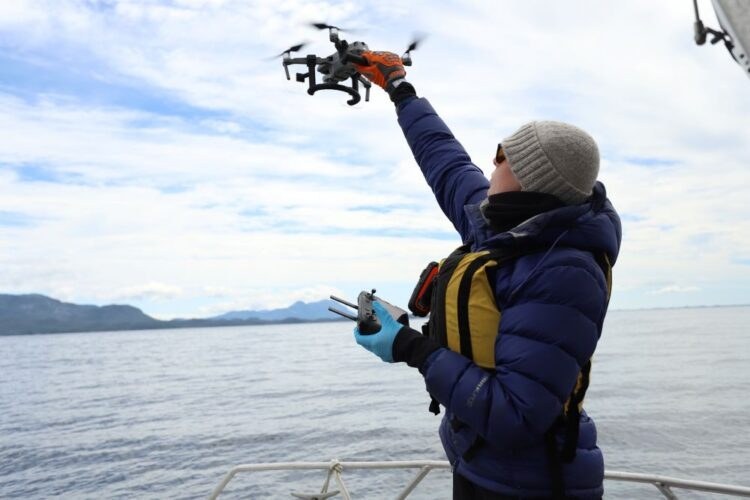
A commercial DJI Mavic 2 Pro quadcopter with a sterile Petri dish was used to collect material. The drone was directed through the exhalation cloud, leaving droplets containing cells and genetic material of the animal on the surface. This approach eliminates the need for darts, which are typically used to take small samples of skin and subcutaneous fat.
In total, researchers collected 58 samples from 26 humpback whales. One sample could include material from one to six exhalations, averaging approximately 2.6. About 38% of the samples were obtained by launching the drone directly from the shore, without a research vessel.
On average, 83.6% of the DNA detected in the samples belonged to the whales themselves. This proved sufficient for sequencing the nuclear genome, inherited from both parents, and the mitochondrial genome, passed down through the maternal line.
The average sequencing depth of the nuclear genome was 2.3 times, while that of the mitochondrial genome was 94 times. This indicator reflects how many times, on average, each DNA segment is read. Although the nuclear genomes were obtained with relatively low depth, the data were sufficient to study genetic diversity and differences between populations.
The reliability of the approach was verified using repeated samples. Samples from the same animals, collected during different encounters and in different years, yielded consistent genetic profiles. Comparison with biopsies from two whales also confirmed the results. Additionally, the analysis correctly determined the sex of all examined animals and identified three previously undescribed variants of mitochondrial DNA.
To reduce the risk of material mixing, the team selected a whale located on the windward side within groups. Researchers did not detect significant contamination of samples with DNA from neighboring animals. Samples were not collected from resting whales, and flights were aborted if the animal reacted to the drone.
The obtained genomes revealed differences between humpback whales from the northern part of the Pacific Ocean and Atlantic populations. However, the examined Pacific group did not show pronounced signs of recent inbreeding. In the future, the team plans to study kinship among whales that feed together and determine the role of familial and stable social relationships in forming such groups.
Additional information may come from the remaining approximately 16% of DNA in the samples: a significant portion is associated with microorganisms in the respiratory tract. These were not studied in detail in this work, but in the future, a single exhalation sample could become a source of information on both the animal's genetics and its respiratory microbiome.
The method still needs to be tested on other cetacean species. Its effectiveness may depend on the size of the animals, their behavior, and exhalation characteristics. Increasing the sequencing depth will be necessary for a more accurate assessment of certain genetic indicators. Nevertheless, the study already demonstrates the possibility of obtaining whole-genome data from wild whales without skin puncture.