Siri’s AI recaps mistook videos for real life during testing
A The Verge author tested the Siri Recap feature on the Apple Watch Ultra 4 and found that it helps recall the content of work meetings but often errs in everyday situations. The system mistook audio from videos for real-life events and omitted important details from conversations.
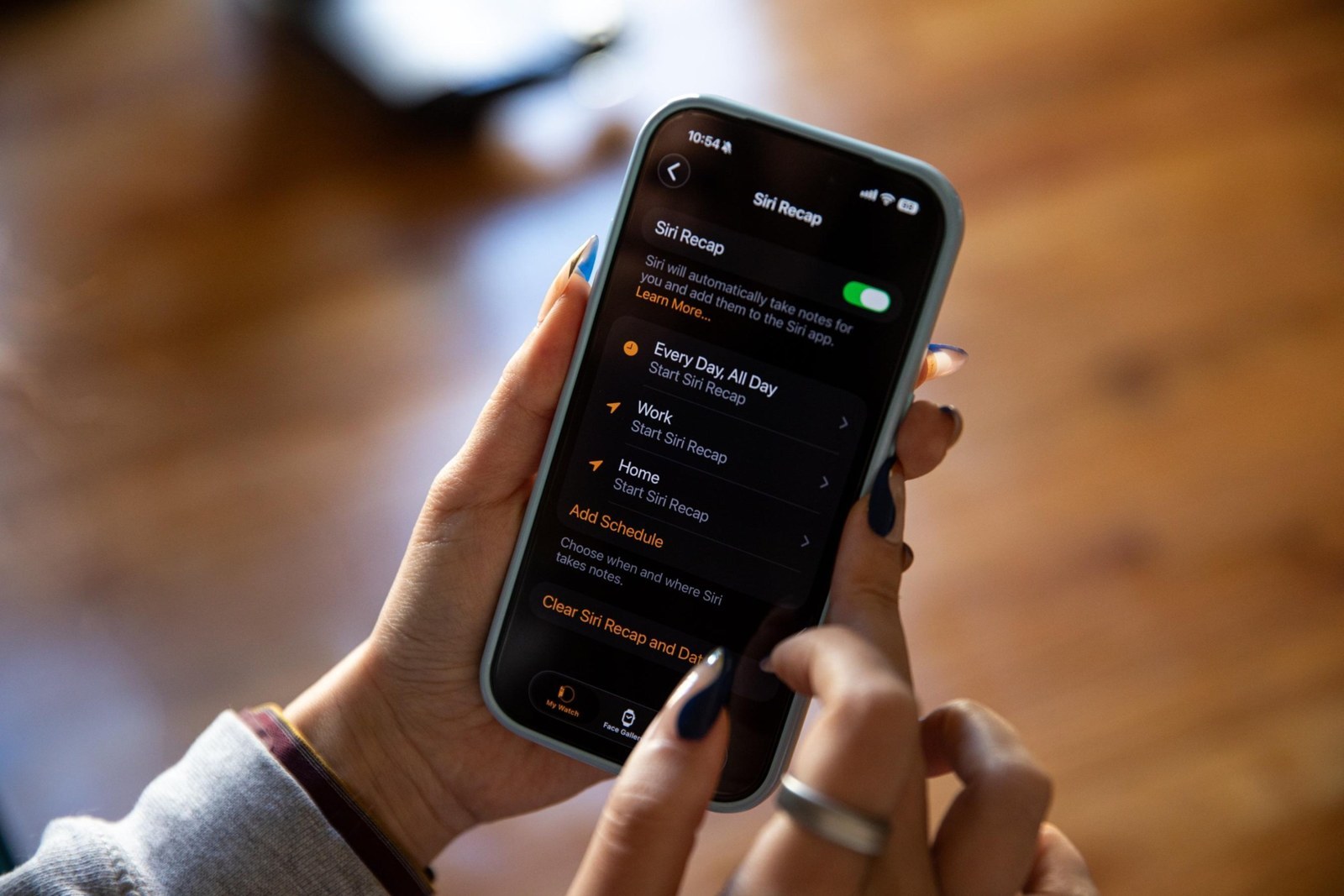
Siri Recap is designed to automatically generate brief notes based on overheard conversations. Apple suggests using it as an additional assistant—for example, to focus on a lecture or meeting and later revisit the key topics discussed.
According to The Verge’s description, the feature activates only with the device owner’s consent. The user can set a schedule for its operation—for instance, a specific hour at the office on weekdays. Unsaved summaries are automatically deleted after one, three, or seven days, depending on the selected settings.
Unlike a standard voice recorder, Siri Recap does not provide the user with a full transcript specifying who said what and when. The original audio is also not saved. As explained in the review, the sound is processed in a secure component of the S11 chip and then deleted. Most computations are performed on the device, while cloud processing occurs through Apple Private Cloud Compute.
However, the lack of detailed attribution complicates the understanding of some summaries. During testing, Siri recapped a TikTok video about the creator’s hospitalization as if it could have referred to the journalist herself or someone she knew. Another video was turned into a summary of a supposed personal conversation.
The author attributes such errors to the watch picking up sound from a nearby phone but failing to correctly identify its source. When headphones are used, Siri Recap automatically disables itself. This prevents such notes but requires adjusting habits to accommodate the feature’s functionality.
The system proved more useful in professional scenarios. A summary after a smart glasses presentation helped the journalist reconstruct the main topics. Some interview recaps were also linked to corresponding recordings in the Voice Memos app.
At the same time, the algorithm prioritized specific facts, numbers, and dates. In one interview, it omitted a personal story and the interviewee’s expressive opinions, which the author considered the most interesting. For structured meetings, this approach may be convenient, but the editorial value of a conversation does not always align with what the AI selects.
In interactions with close contacts, the results were even less predictable. The system meticulously documented domestic arguments and discussions about TV shows that the journalist did not want to save. In other cases, overly brief summaries lost the meaning of the conversation. Jokes and emotional statements, presented without context, could appear much harsher than they sounded in reality.
A separate issue is the awareness of those around the user. According to the author’s observations, Siri Recap lacks an external indicator or sound signal to warn that notes are being taken. Therefore, the watch owner must personally explain to others what the feature does and how the audio is processed.
Over the testing period, more than 50 summaries were generated. The author found only a small portion of them useful, primarily those related to work. She appreciated Apple’s efforts to limit the storage of sensitive information but remained unconvinced that constant automatic summarization is sufficiently useful in everyday life.
These conclusions reflect one author’s experience using the beta version of Siri Recap and do not constitute a comparative study of the technology’s accuracy.