Perseverance discovers light-colored rocks on Mars promising for the search for traces of ancient life
The Perseverance rover has detected a cluster of rocks rich in hydrated silica outside Jezero Crater—a material that on Earth is capable of preserving microscopic fossils.
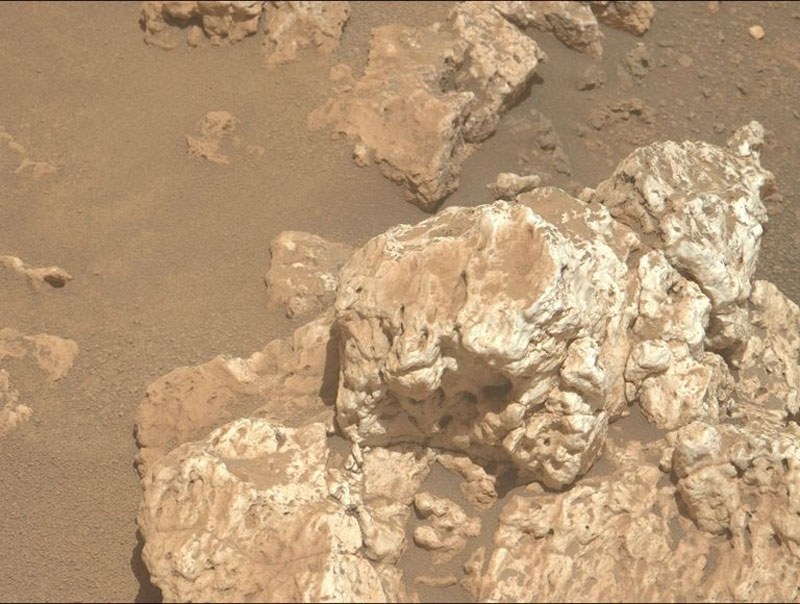
The discovery was made in the Idubi area, where ancient sections of the Martian crust are exposed on the surface. Cameras captured images of the light-colored rocks on October 29. According to a NASA report dated November 16, data from the SuperCam instrument confirmed elevated levels of hydrated silica and a non-magmatic origin of the rocks.
On Earth, similar deposits form in hydrothermal systems, soils, and groundwater circulation zones. Studying them will help reconstruct the history of water on Mars and assess whether conditions in this area could have supported life.
Previously, Perseverance encountered silica-rich rocks along the inner edge of Jezero Crater. Those fragments were too small for detailed analysis using the instruments on the robotic arm. The rocks in Idubi are larger, and the team has already begun a detailed analysis of their chemical and mineral composition, formation conditions, and ability to preserve possible biological traces.