ESA selects seven-satellite mission to study Earth's magnetic shield
ESA has chosen Plasma Observatory as its next medium-class scientific mission. Seven spacecraft will study the magnetosphere, but the project must still undergo official approval.
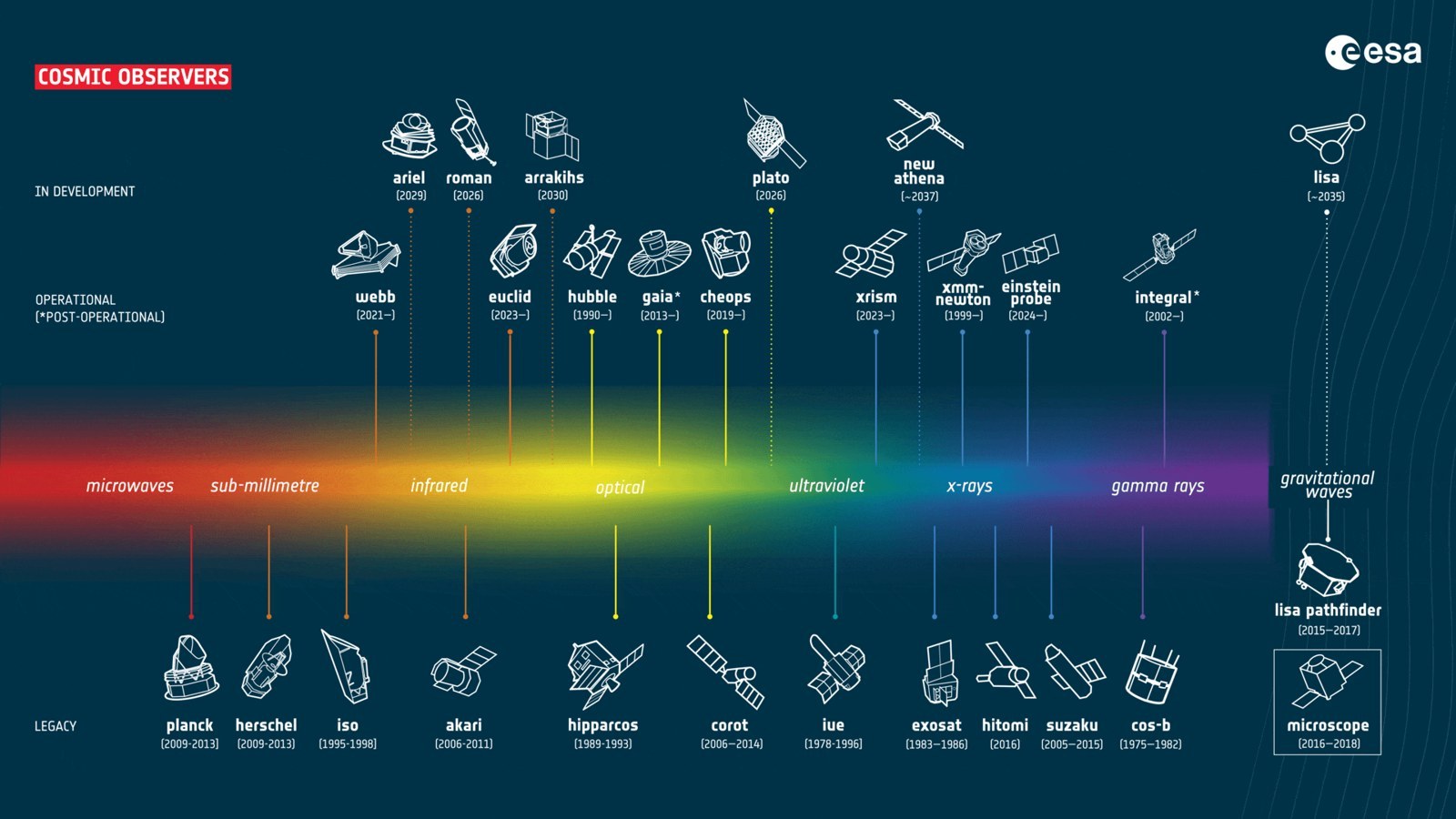
The mission will consist of seven spacecraft. They will simultaneously measure magnetic and electric fields, as well as charged particle flows in different regions of the magnetosphere. This will allow tracking energy transfer on scales from several kilometers to tens of thousands of kilometers.
Plasma Observatory is intended to demonstrate how rapid processes in plasma are linked to large-scale changes in Earth's magnetosphere. ESA's previous Cluster mission consisted of four satellites and could study only one spatial and temporal scale at a time. The new constellation will collect data from seven points and correlate local events with changes across the entire system.
Plasma consists of charged particles. The solar wind carries it toward Earth, where it interacts with the planet's magnetic field and forms the magnetosphere—a natural protective shield. Such processes are associated with auroras, and during strong events, they can disrupt satellite operations and energy infrastructure.
The mission will be the first under the Voyage 2050 program. Project selection began in 2021, and it must now proceed to official approval before moving on to development and construction. The launch is scheduled for the late 2030s.